

← Terug naar blog
Voice AISTTLLMTTS
The Anatomy of a Modern AI-Powered IVR
door Paul Lange | Agent.nl
AI-powered IVR is a modular stack—STT, LLM, TTS, and orchestration—delivering real-time, humanlike conversations and scalable automation. Choose streaming, all-in-one API, or cascading pipelines. By 2026, ~80% of inbound calls could be automated.
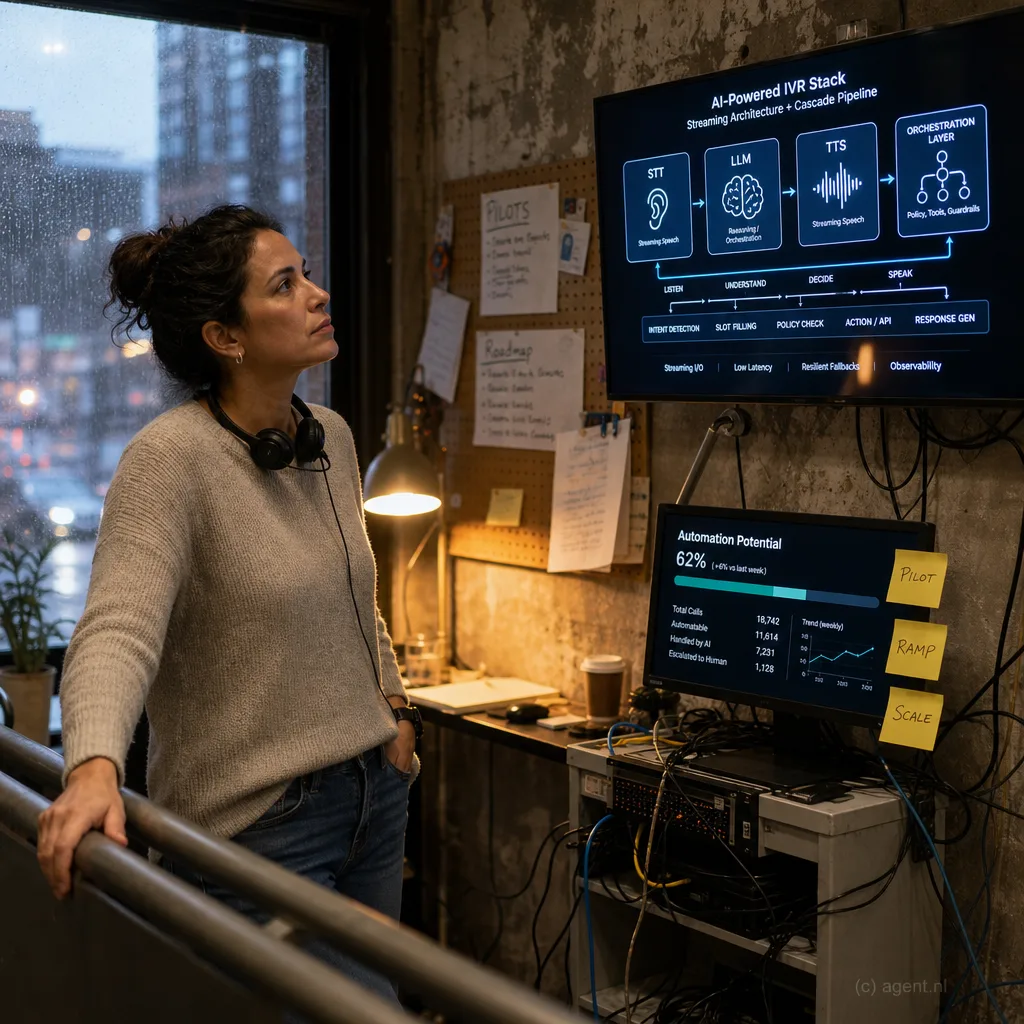
Your current call center is yesterday's technology. A modern AI powered IVR isn’t a single model, it’s a tightly integrated stack: STT ears, LLM brain, TTS voice, and orchestration conductor. STT converts speech to text with low latency so the interaction stays real time, the LLM reads intent, context and sentiment, fetches data and crafts a natural reply, and the TTS voice delivers that reply with natural prosody and timing. Orchestration manages the live flow between components, offering streaming architectures for production grade, interruptible agents, or an all in one API for quick deployment or a cascading pipeline for prototypes. This modular setup is changing how call centers operate, reducing unnecessary transfers to humans while delivering a human like conversational experience. According to AI call centers 2026, automating 80 percent of inbound calls with STT plus LLM is already within reach in 2026, signaling a major shift in efficiency and customer experience. https://s2speech.com/en/blog/ai-call-centers-2026-stt-llm
The backbone and how these pieces fit together are described by AssemblyAI, which lays out the four pillars and the orchestration options in a clear way. A typical interaction looks like this: user says can you help me reschedule my appointment, STT converts to text, the LLM determines the action and crafts a reply, and TTS speaks back I can help you reschedule what time would work better for you. This modular approach remains relevant even as end to end models emerge. Choose a streaming architecture for latency sensitive, production grade environments, choose an all in one API for rapid deployment or choose a cascading pipeline for asynchronous tasks. https://www.assemblyai.com/blog/the-voice-ai-stack-for-building-agents
If you are leading a customer service team, what would you replace first in your stack to unlock efficiency and human capacity for higher value tasks? Are you ready to pilot a voice AI stack or does your roadmap favor traditional IVR for now?
#AI #VoiceAI #IVR #CustomerService #LLM #STT #TTS #Automation